


STULZ CyberAir 3PRO CW Chilled Water CRAC Units Australia
STULZ CyberAir 3PRO CW Chilled Water CRAC Units Australia
Home / Precision Cooling / STULZ / CyberAir 3PRO CW
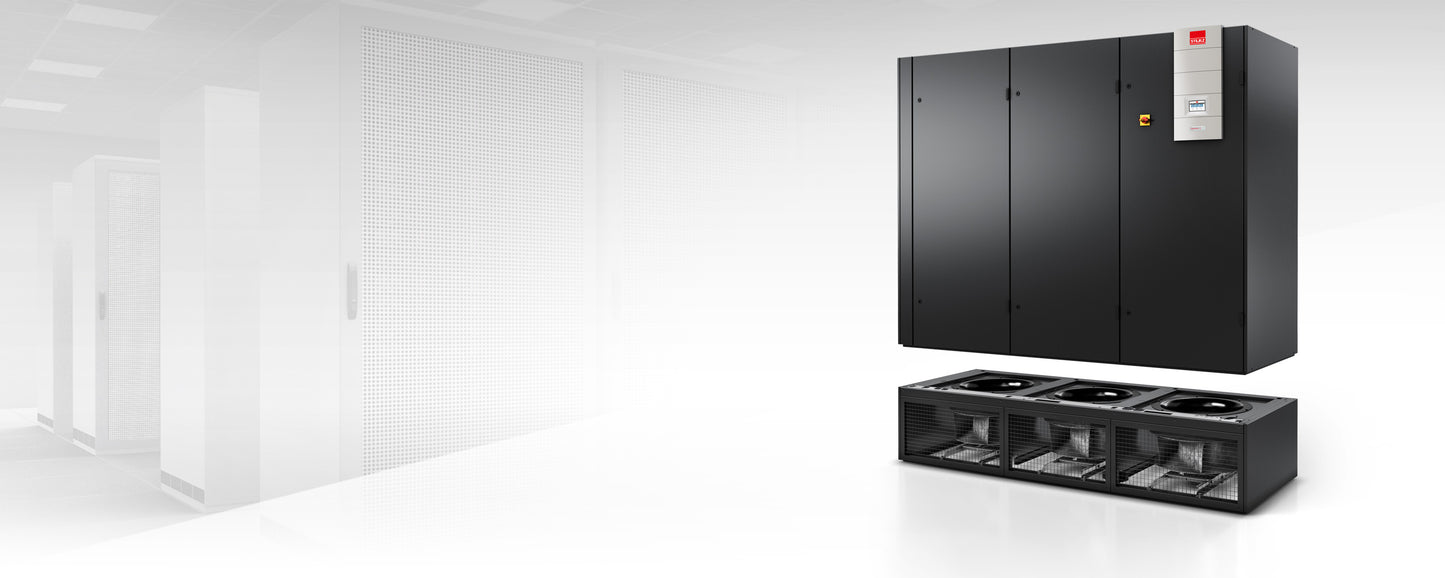
The STULZ CyberAir 3PRO CW is a chilled water CRAC and CRAH unit for data centres, delivering 22 kW to 260 kW of cooling in 11 sizes with airflow from 7,500 to 46,200 cubic metres per hour, supplied and serviced across Australia. It connects to a central chilled water plant rather than carrying its own compressors, which is why it is the standard choice for large colocation halls and hyperscale white space. Indigi Power and Cooling supplies, installs, commissions and maintains CyberAir 3PRO CW units nationally from hubs in Brisbane, Sydney and Melbourne.
Once a facility grows past a handful of racks, cooling stops being a room-by-room problem and becomes a plant problem. At that point it is usually cheaper and more reliable to make cold water centrally with high efficiency chillers and distribute it, rather than put a compressor inside every unit on the floor. The CyberAir 3PRO CW is the air handling half of that arrangement. STULZ describes it as an innovative chilled water air conditioner for data centers, and in practice it is the workhorse CRAH unit that sits at the end of a data hall row, takes chilled water in, and turns it into a controlled volume of cold supply air.
There is no compressor, no refrigerant charge and no condenser to find roof space for. What the unit does contain is a large chilled water coil, EC fans, filtration, and the STULZ controller that keeps supply air inside the ASHRAE TC 9.9 recommended envelope. Because the compression work happens back at the chiller, the unit itself draws very little power, and the engineering argument shifts from compressor efficiency to two other things: how little fan energy it takes to move the air, and how warm the water can be while still meeting the load. Both of those are where this range is designed to win.
Indigi Power and Cooling is an Indigenous and Veteran owned critical power and cooling specialist, registered with Supply Nation and ICN Gateway. We handle CyberAir 3PRO CW selection, supply, installation, commissioning and ongoing maintenance across Australia, and we also service the installed base of STULZ and other chilled water CRAH equipment already running in Australian facilities.
See the CyberAir 3PRO in operation
STULZ CyberAir 3PRO product overview, 3 minutes 29 seconds. The video covers both the DX and the CW chilled water configurations of the CyberAir 3PRO platform.
Why the CyberAir 3PRO CW leads its class
Maximum capacity per footprint
Up to 260 kW from a single cabinet between 950 mm and 3,350 mm wide and only 890 mm to 1,040 mm deep. White space that goes to plant is white space that cannot be leased.
Very low fan energy
Airflow Efficiency Ratio down to 0.11 W per cubic metre per hour on raised floor models. Internal pressure losses were reduced specifically to cut fan power, which is a continuous load.
More chiller Free Cooling hours
Higher permissible air and water temperatures let the chiller plant run in Free Cooling for more of the year, which is where the real annual saving on a chilled water system comes from.
Reduced water flow rate
A lower flow rate for the same duty means less pump power and smaller hydraulic components, so both the running cost and the capital cost of the pipework fall.
CW2 dual circuit redundancy
The CW2 cooling system connects one unit to two independent chilled water circuits, so a single unit survives the loss of one circuit without a second cabinet on the floor.
Built for hyperscale with ABR
The ABR version (B for BIG) raises cabinet height to 2,915 mm for a larger coil and higher airflow, aimed squarely at hyperscale data halls rather than comms rooms.
Range specification at a glance
| Parameter | Specification |
|---|---|
| Cooling capacity | 22 kW to 260 kW |
| Airflow volume | 7,500 to 46,200 cubic metres per hour |
| Sizes | 11 sizes |
| Cooling systems | CW single chilled water circuit, CW2 dual chilled water circuit |
| Air conduction | Upflow, Downflow, Downflow with outlet to front, back or down, ASR raised floor, ABR raised floor BIG |
| Height | 2,495 mm for ASR, 2,915 mm for ABR |
| Width | 950 mm to 3,350 mm depending on size |
| Depth | 890 mm to 1,040 mm depending on size |
| Reference water temperature | 12 degrees Celsius flow, 18 degrees Celsius return on the published tables |
| Filtration | ISO 16890 rated media with filter monitoring through the unit controller |
| Free Cooling | Indirect Dynamic Free Cooling or Direct Free Cooling, delivered at the chiller plant |
How the chilled water system fits together
The diagram above shows the whole picture. Chilled water is generated centrally, distributed in flow and return mains, and delivered to CyberAir 3PRO CW units on the data hall floor. On the left the units discharge into a raised floor plenum and cold air rises through perforated tiles into the cold aisle. On the right a slab floor room is served without a floor void. The same unit family covers both, which matters when a campus has mixed legacy and new build space and the operator wants one spares holding and one control platform across all of it.
Two consequences follow from that architecture and they are the reason large sites choose chilled water. First, all the noisy, maintenance-heavy rotating plant sits outside the white space, so work on a chiller does not mean work inside a secure data hall. Second, capacity is added by adding air handling units on an existing pipe main rather than by re-engineering refrigerant runs, which is how a staged build is meant to work.
Air conduction options
Upflow and Downflow
Fans inside the cabinet. Upflow discharges from the top, ducted or free blowing, for rooms with no floor void. Downflow discharges into a raised floor plenum, and can be specified with the outlet to the front, to the back or downward.
ASR raised floor
The fan box moves down into the floor void as a separate module. That frees the whole cabinet volume for a larger chilled water coil and removes a direction change from the air path, which is where the low Airflow Efficiency Ratio figures come from. Total height 2,495 mm.
ABR raised floor BIG
The B stands for BIG. Cabinet height rises to 2,915 mm on sizes 4, 5, 7 and 8 to carry a larger heat exchanger and more airflow per unit. This is the hyperscale configuration, chosen when the design brief is fewest units per megawatt.
The raised floor arrangement deserves a closer look because it is the single biggest efficiency lever available on a CRAH unit. Fan power is a genuinely continuous load: it runs at full duty every hour of the year, including the hours when the IT load is light. Moving the fans into the floor void, shortening the air path and removing internal pressure losses drops Airflow Efficiency Ratio to around 0.11 to 0.14 W per cubic metre per hour across the published ASR range, against 0.14 to 0.17 for the equivalent high cabinet models. On a 46,000 cubic metre per hour unit that difference is measured in kilowatts, permanently.
Model table: ASR CW raised floor, single chilled water circuit
| Model | Airflow m³/h | Cooling kW | Noise dBA | EER | AER W/(m³/h) | Size |
|---|---|---|---|---|---|---|
| ASR 400 CW | 10,500 | 58 | 49 | 44.5 | 0.12 | 1 |
| ASR 610 CW | 14,000 | 81 | 55 | 53.8 | 0.11 | 2 |
| ASR 1040 CW | 20,500 | 117 | 53 | 50.7 | 0.11 | 3 |
| ASR 1360 CW | 25,000 | 146 | 56 | 47.1 | 0.12 | 4 |
| ASR 1710 CW | 31,000 | 181 | 55 | 47.7 | 0.12 | 5 |
| ASR 2060 CW | 41,000 | 243 | 55 | 45.0 | 0.13 | 7 |
| ASR 2410 CW | 46,000 | 273 | 57 | 42.0 | 0.14 | 8 |
Model table: ASH CW high cabinet, single chilled water circuit
| Model | Airflow m³/h | Cooling kW | Noise dBA | EER | AER W/(m³/h) |
|---|---|---|---|---|---|
| ASH 400 CW | 10,500 | 58 | 56 | 34.1 | 0.16 |
| ASH 610 CW | 14,000 | 81 | 55 | 42.5 | 0.14 |
| ASH 1040 CW | 20,500 | 117 | 53 | 41.6 | 0.14 |
| ASH 1360 CW | 25,000 | 146 | 58 | 39.4 | 0.15 |
| ASH 1710 CW | 31,000 | 181 | 58 | 33.5 | 0.17 |
| ASH 2060 CW | 41,000 | 243 | 56 | 38.6 | 0.15 |
| ASH 2410 CW | 46,000 | 273 | 57 | 35.9 | 0.17 |
Model table: ASR CW2 raised floor, two chilled water circuits
| Model | Airflow m³/h | Cooling kW | Noise dBA | EER | AER W/(m³/h) | Size |
|---|---|---|---|---|---|---|
| ASR 360 CW2 | 10,000 | 40 | 49 | 34.8 | 0.12 | 1 |
| ASR 580 CW2 | 13,800 | 62 | 55 | 41.1 | 0.11 | 2 |
| ASR 770 CW2 | 19,000 | 95 | 53 | 41.1 | 0.12 | 3 |
| ASR 1080 CW2 | 23,300 | 118 | 56 | 40.7 | 0.12 | 4 |
| ASR 1460 CW2 | 29,000 | 138 | 54 | 40.6 | 0.12 | 5 |
| ASR 1960 CW2 | 38,000 | 187 | 54 | 39.7 | 0.12 | 7 |
| ASR 2160 CW2 | 45,000 | 195 | 56 | 33.1 | 0.13 | 8 |
Cabinet dimensions by size
| Size | Width mm | Height mm (ASR) | Height mm (ABR) | Depth mm |
|---|---|---|---|---|
| Size 1 | 950 | 2,495 | Not offered | 890 |
| Size 2 | 1,400 | 2,495 | Not offered | 890 |
| Size 3 | 1,750 | 2,495 | Not offered | 890 |
| Size 4 | 2,200 | 2,495 | 2,915 | 890 |
| Size 5 | 2,550 | 2,495 | 2,915 | 890 |
| Size 7 | 3,110 | 2,495 | 2,915 | 980 to 1,040 |
| Size 8 | 3,350 | 2,495 | 2,915 | 980 to 1,040 |
Upflow, Downflow and Downflow with front, back or downward outlet selections, ABR performance data, alternative water temperature regimes and 60 Hz supply are quoted on application. Talk to Indigi and we will run the selection against your actual heat load, your chilled water design temperatures and your available floor plate.
Water temperature is the whole efficiency argument
On a chilled water system, the cooling unit is not where the energy goes. Almost all of the electrical input sits in the chiller and the pumps. That reframes what a good CRAH unit does: its job is to make the plant behind it cheaper to run, and the way it does that is by working properly at warmer water temperatures.
The published CyberAir 3PRO CW tables are quoted at 12 degrees Celsius flow and 18 degrees Celsius return. Historically many Australian data halls were designed around 6 or 7 degree flow temperatures, inherited from comfort cooling practice, which forced the chiller to work hard year round and made Free Cooling almost impossible outside winter. STULZ designs the CyberAir 3PRO CW around higher air and water temperatures, and states that this increases the number of Free Cooling hours available at the chiller. That is the mechanism that actually moves annual energy consumption, and it is why raising the design water temperature is usually the first thing worth examining on an existing site.
The second lever is flow rate. STULZ states that the unit achieves its duty at a reduced water flow rate, which lowers system power consumption because the pumps do less work, and lowers investment cost because smaller hydraulic components can be specified. On a large hall, pipe diameter, valve sizing and pump selection are a meaningful share of the mechanical capital budget, so this is not a rounding error.
The third is air temperature optimisation in line with the ASHRAE recommendation. ASHRAE TC 9.9 puts the recommended server inlet envelope at 18 to 27 degrees Celsius. Running the cold aisle near the top of that band rather than the bottom raises the return air temperature to the coil, which raises the temperature difference across the coil, which in turn allows the warmer water and the reduced flow rate described above. All three levers are the same lever seen from different ends, and they only work together if the containment is honest and hot and cold air are genuinely separated.
Reading the published EER figures correctly
The EER values in the tables above, from 33.1 to 53.8, look extraordinary next to the 4 to 5 range quoted for a DX unit. They are not comparable, and it is worth being explicit about why. On a chilled water unit the EER expresses cooling capacity against the electrical input of the unit itself, which is essentially the fans, because the compression work happens back at the chiller and is not counted here. A whole-of-system efficiency comparison has to include the chiller, the pumps and the heat rejection plant. Treat the unit EER as a measure of how efficiently this box moves and conditions air, and use plant modelling, not this number, for a PUE case.
CW2 and what redundancy actually buys
The CW2 cooling system connects a single unit to two independent chilled water circuits. If one circuit is isolated for maintenance, fails, or loses its pump set, the unit continues to cool from the other. Compare that with the conventional approach of installing N+1 whole units: CW2 puts the redundancy inside the cabinet, which saves floor space and means the redundant capacity is not sitting idle in a separate machine. The trade is duty per cabinet. As the table shows, a size 8 ASR 2160 CW2 delivers 195 kW against 273 kW for the single circuit ASR 2410 CW at the same physical size, because the coil face is shared between two circuits. Whether that trade is worth making depends on how your chilled water distribution is arranged and what your resilience obligations look like, which for regulated Australian operators often means an APRA CPS 230 style operational risk assessment rather than a purely engineering judgement.
Containment, filtration and air hygiene
A CRAH unit only performs to its published numbers if the air it receives is the air the selection assumed. Cold aisle or hot aisle containment, blanking panels in every unused rack U, and sealed floor cutouts are what keep bypass air and recirculation from eroding the temperature difference across the coil. Filtration to ISO 16890 protects the coil face from fouling, and a fouled coil is one of the most common causes of a slow, unexplained capacity loss on chilled water plant. Where the installation forms part of a mechanical ventilation system, AS/NZS 3666 hygiene obligations apply to cleaning, inspection and record keeping, and those records matter at audit.
Applications
- Hyperscale and large colocation data halls where the design brief is the fewest CRAH units per megawatt of IT load, using ABR sizes 4 to 8
- Enterprise data centre and server room cooling on an existing central chilled water plant, where adding capacity means adding air handling units rather than refrigerant plant
- Campus and precinct sites with a shared chiller plant serving both office comfort cooling and critical IT load
- Facilities running CHW CRAC arrangements that need dual circuit redundancy inside a single cabinet through the CW2 option
- Government, defence, health and financial services white space operating under formal resilience obligations such as APRA CPS 230
- Staged builds where the mechanical plant room is sized once and the hall is populated with CDW and CHW units over several years
- Retrofit of legacy raised floor halls where fan energy is the largest remaining cooling saving available
CyberAir 3PRO CW compared with Vertiv Liebert PCW
| Attribute | STULZ CyberAir 3PRO CW | Vertiv Liebert PCW |
|---|---|---|
| Capacity band | 22 kW to 260 kW across 11 sizes | Broadly comparable large chilled water coverage. Published capacities are stated at Vertiv reference conditions. |
| Airflow | 7,500 to 46,200 m³/h | Comparable range on the larger frames |
| Air conduction options | Upflow, downflow with front, back or downward outlet, ASR raised floor fan box, ABR BIG cabinet | Upflow and downflow, with under floor fan options on selected models |
| Dual water circuit in one cabinet | Yes, the CW2 cooling system connects one unit to two chilled water circuits | Dual coil and dual fluid arrangements are available on selected models. Confirm per size. |
| Published fan efficiency metric | Airflow Efficiency Ratio published per model, 0.11 to 0.17 W per m³/h | Fan power is published, though not always as a single comparable ratio |
| Cabinet depth | 890 mm to 1,040 mm | Varies by frame. Check against your aisle clearance before committing a layout. |
| Australian service | Indigi Power and Cooling, national coverage from Brisbane, Sydney and Melbourne | Indigi also services Liebert equipment. See our Liebert spare parts page. |
Installation, commissioning and maintenance in Australia
A chilled water CRAH installation is a lighter job than a DX one in some respects and a heavier one in others. There is no refrigerant pipe run to design and no external condenser to site, but there is hydraulic work: flow and return connections, isolation and regulating valves, strainers, air venting, insulation, and a control valve that has to be sized for authority rather than convenience. Get the valve authority wrong and the unit hunts, which shows up later as unstable supply air temperature and unnecessary fan modulation.
Electrical work must be carried out by a licensed electrician to AS/NZS 3000. Where the unit is specified with a DX backup circuit, or where the wider system includes chiller work, any intervention on a refrigerant circuit requires an ARCtick licensed refrigeration technician under the Ozone Protection and Synthetic Greenhouse Gas Management Regulations. Where the installation forms part of a mechanical ventilation system, AS/NZS 3666 applies to hygiene, cleaning and record keeping. Indigi holds these capabilities in house rather than subcontracting the critical path.
Typical scope covers heat load verification against actual IT draw rather than nameplate, hydraulic connection and commissioning of the water circuit, balancing and flow verification, rigging and placement including the floor void fan box on ASR and ABR units, controller configuration, BMS integration, sequencing where multiple units share a hall, and witness commissioning with documented handover. Indicative pricing for server room cooling design and installation runs from $8,000 to $15,000 for small rooms, $25,000 to $45,000 for medium installations and $45,000 to $60,000 plus for large projects. Large chilled water hall projects sit at the upper end and above, and scope always depends on the site.
Once running, a chilled water unit needs a maintenance regime built around water, air and controls rather than refrigerant. That means coil condition and cleanliness, filter differential pressure and changeout, condensate tray and drain integrity, valve and actuator operation, water quality and glycol concentration where used, fan bearing and EC motor health, and a review of controller alarm history. See our CRAC unit maintenance services and CHW CRAC maintenance pages for how we structure planned maintenance, and our CRAC installation and commissioning page for the delivery process.
Frequently asked questions
What is a CRAH unit and how is it different from a CRAC unit?
A CRAH unit is a computer room air handler. It contains a chilled water coil and fans but no compressor, and it relies on a central chiller plant to produce cold water. A DX CRAC unit contains its own compressor and refrigerant circuit. The STULZ CyberAir 3PRO CW is a chilled water unit, so it is a CRAH in the strict sense, though in Australian practice the term chilled water CRAC is used just as often. The practical difference is where the compression work happens and therefore where the maintenance and the noise sit.
What is the cooling capacity range of the STULZ CyberAir 3PRO CW?
The CyberAir 3PRO CW covers 22 kW to 260 kW across 11 sizes, with airflow from 7,500 to 46,200 cubic metres per hour. The published model tables run from 58 kW on the ASR 400 CW at 10,500 cubic metres per hour up to 273 kW on the ASR 2410 CW at 46,000 cubic metres per hour, quoted at 12 degrees Celsius flow and 18 degrees Celsius return water temperature.
What is the difference between the CW and CW2 cooling systems?
CW is a single chilled water circuit. CW2 connects one unit to two independent chilled water circuits, giving a redundant chilled water supply inside a single cabinet so the unit keeps cooling if one circuit is lost or isolated. The trade is duty per cabinet: at size 8 the ASR 2160 CW2 delivers 195 kW against 273 kW for the single circuit ASR 2410 CW, because the coil face is shared between two circuits.
What is the difference between the ASR and ABR versions?
Both are raised floor arrangements with the fan box relocated into the floor void. ASR is the standard raised floor unit at 2,495 mm total height. ABR stands for BIG and raises cabinet height to 2,915 mm on sizes 4, 5, 7 and 8, carrying a larger heat exchanger and more airflow per unit. ABR is aimed at hyperscale data halls where the objective is the fewest units per megawatt of IT load.
How much floor space does a CyberAir 3PRO CW need?
Cabinet width runs from 950 mm at size 1 to 3,350 mm at size 8, with depth of 890 mm up to 2,550 mm wide and 980 to 1,040 mm on the largest frames. Height is 2,495 mm for ASR including the floor void fan box, and 2,915 mm for the ABR BIG cabinet. Confirm the floor void depth and the ceiling height early, because on ABR units the cabinet height is usually the binding constraint rather than the footprint.
Why are the EER figures so much higher than on a DX CRAC unit?
Because on a chilled water unit the EER counts only the electrical input of the unit itself, which is essentially the fans. The compression work happens at the chiller and is not included, which is why figures of 33 to 54 appear on the CW tables against roughly 4 to 5 on a DX unit. The two numbers are not comparable. For a whole-of-system or PUE case you have to include the chiller, the pumps and the heat rejection plant.
Who installs and services chilled water CRAC units in Australia?
Indigi Power and Cooling supplies, installs, commissions and maintains STULZ chilled water CRAH and CRAC equipment across Australia from hubs in Brisbane, Sydney and Melbourne. Electrical work is carried out to AS/NZS 3000 by licensed electricians, refrigerant work on chiller plant or DX backup circuits by ARCtick licensed technicians, and AS/NZS 3666 hygiene obligations are covered where mechanical ventilation applies. We also service existing chilled water units installed by others, including Vertiv Liebert equipment.
Where we install and service
Brisbane and QLD
Brisbane CBD, Woolloongabba, Eight Mile Plains, Port of Brisbane, Gold Coast, Sunshine Coast, Ipswich, Townsville, Cairns
National HQ at Tingalpa. Growing colocation footprint and the fastest response for chilled water plant in South East Queensland.
Sydney and NSW
Sydney CBD, Parramatta, North Ryde, Macquarie Park, Western Sydney, Newcastle, Wollongong, Canberra (ACT)
The largest concentration of hyperscale and colocation white space in Australia, and where ABR and CW2 selections come up most often.
Melbourne and VIC
Melbourne CBD, Port Melbourne, Docklands, Dandenong, Tullamarine, Geelong, Ballarat, regional Victoria
The strongest chiller Free Cooling business case on the mainland. Raising design water temperature pays back fastest here.
Perth and WA
Perth CBD, Fremantle, Kalgoorlie, Pilbara, regional WA
High ambient design conditions push the heat rejection side of the plant. Chiller and dry cooler sizing is the critical variable.
Adelaide and SA
Adelaide CBD, Port Adelaide, Salisbury, Mount Gambier, Whyalla, regional SA
Useful Free Cooling hours through the cooler months on a well set up chilled water plant. Served from the Melbourne hub.
Darwin and NT
Darwin CBD, Palmerston, Katherine, Alice Springs, remote NT sites
High humidity conditions. Latent load, condensate handling and coil surface temperature need specific attention at selection stage.
Western Australia, Tasmania and Pacific Islands: we schedule CyberAir 3PRO CW commissioning and chilled water service visits in planned blocks to keep travel costs down, and we can combine cooling, chiller and UPS work into a single mobilisation. Contact us to discuss scheduling.
Related products and services
- CHW CRAC maintenance across Brisbane, Sydney and Melbourne
- CDW CRAC servicing
- CRAC unit maintenance services Australia
- CRAC installation and commissioning
- CRAC topology selector: DX, CHW or CDW
- Server room heat load calculator
- Server room cooling Australia
- Server room UPS and cooling packages
|
Get a CyberAir 3PRO CW selection for your data hall Send us your IT load, chilled water flow and return design temperatures, floor void depth, ceiling height and location, and we will come back with a sized selection, a CW or CW2 recommendation and an installed price. Indigi Power and Cooling is Indigenous and Veteran owned, and registered with Supply Nation and ICN Gateway. Contact Indigi Power and Cooling |

Partner with Us
Reliable Power & Cooling Solutions from Indigi Power & Cooling Expert supply, installation, and contracting services for critical infrastructure across Australia.