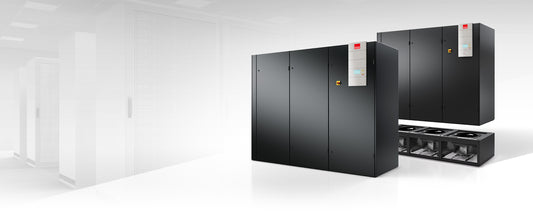
STULZ Precision Cooling in Australia: CyberAir CRAC, CyberRow and Small Room Units
STULZ precision cooling is a German-engineered range of computer room air conditioning units built for data centres, server rooms and other critical environments, spanning roughly 1 kW to 260 kW of sensible cooling per unit and supplied, installed and maintained across Australia by Indigi Power and Cooling.
The range covers perimeter CRAC and CRAH units in the CyberAir family, in-row cooling with CyberRow, compact floor units for small server and battery rooms with CyberAir Mini, and outdoor shelter and cabinet cooling for telecommunications sites. Indigi Power and Cooling is Indigenous and Veteran owned, and registered with Supply Nation and ICN Gateway.
STULZ has been building precision air conditioning since 1947 and remains a family-owned manufacturer headquartered in Hamburg, Germany. Unlike general HVAC brands that added a data centre line, precision cooling is the whole business. That focus shows up in the things that actually matter on a critical site: high sensible heat ratio so the unit removes heat instead of wasting capacity on dehumidification, EC fan technology, close control of temperature and humidity, and a controller designed to run several units as a coordinated group rather than as competing thermostats.
Indigi Power and Cooling supplies, installs, commissions and maintains STULZ precision cooling equipment throughout Australia. We are a critical power and cooling contractor, not a general air conditioning firm, so the same team that sizes and installs your CRAC units also handles the UPS, the switchboard work and the ongoing maintenance regime. That matters because cooling failures in a server room are usually not cooling failures at all. They are power problems, control problems or airflow problems that a cooling-only contractor is not equipped to diagnose.
This page sets out the STULZ range by capacity band, explains the difference between DX and chilled water CyberAir configurations, covers the CRAC versus CRAH question that trips up most buyers, and explains what Indigi can do for STULZ equipment you already own, including units that somebody else installed. If you already know your heat load, skip to the range selection table below. If you do not, send us your room dimensions, rack count and IT load and we will do the calculation with you.
Which STULZ unit suits your load
The single most common mistake in precision cooling procurement is choosing a product family before establishing the load. The table below maps a real sensible heat load to the STULZ product designed for it. Capacities are the manufacturer's published ranges for the family. The exact figure for any given unit depends on the model size, the cooling system selected, the air-on condition and, for DX units, the ambient design temperature at your site, which in Australia is the number that most often decides whether a unit that works in Europe works in Darwin.
Table: STULZ precision cooling range selection by sensible heat load and application
| Load band and application |
STULZ product |
Capacity range |
Format and notes |
| 1 to 16 kW: comms cupboards, roadside cabinets, shelters and containers |
SplitAir, WallAir, TelAir, ShelterAir FC, CabinetAir PRT |
1 to 16 kW |
Wall mounted, split and cabinet-mounted units with Free Cooling options for unattended outdoor sites |
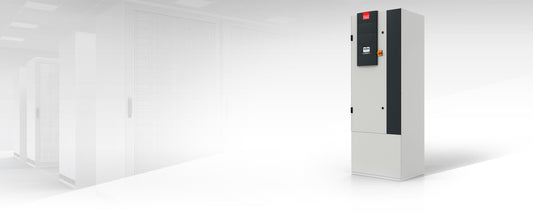
| 5.9 to 34.7 kW: small server rooms, equipment rooms, UPS and battery rooms |
CyberAir Mini |
5.9 to 34.7 kW |
Four sizes. The successor to MiniSpace, so this is the natural replacement path for the large installed base of MiniSpace units in Australian comms rooms |
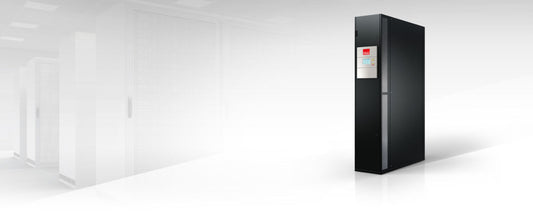
| 11 to 58 kW per unit: high-density racks, no raised floor |
CyberRow |
11 to 58 kW |
In-row, horizontal air conduction. One unit serves up to six cabinets. Three widths |
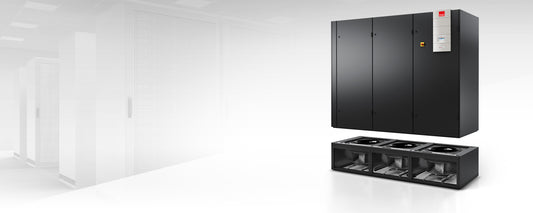
| 20 to 150 kW: perimeter cooling, no chilled water plant on site |
CyberAir 3PRO DX |
20 to 150 kW |
Six sizes, five cooling systems, downflow, upflow or raised floor return. Self-contained refrigeration circuit |
| 22 to 260 kW: perimeter cooling on an existing chilled water system |
CyberAir 3PRO CW |
22 to 260 kW |
Eleven sizes. CW single circuit and CW2 dual circuit. ASR and ABR variants for hyperscale halls |
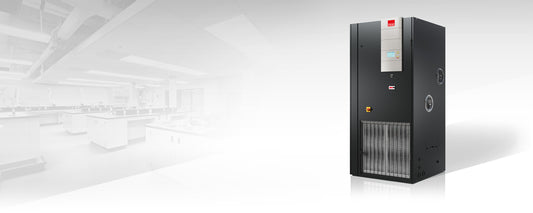
| Around 20 kW with very tight tolerance: laboratories, archives, museums, clean areas |
CyberLab |
20 kW |
Temperature control to plus or minus 0.5 K and humidity to plus or minus 3 per cent, with VDI 6022 hygiene construction |
The CyberAir range: DX or chilled water
CyberAir is the STULZ flagship and the unit most Australian data centre operators actually mean when they say STULZ CRAC. It comes in two fundamentally different forms, and the choice between them is a building decision rather than a cooling decision.
CyberAir 3PRO DX, 20 to 150 kW
The DX version carries its own refrigeration circuit and rejects heat to an external condenser, dry cooler or condensing water loop. It is the right answer where there is no central chilled water plant, or where the IT room needs to be thermally independent of a base building system that shuts down out of hours. STULZ builds it in six sizes across five cooling systems: A and AS for air-cooled operation, G for glycol, GE and GES with integrated indirect Free Cooling, ACW for a combined air and chilled water arrangement, and GCW for glycol with chilled water backup. That last group matters more than it sounds, because dual-source units let a site keep cooling when either the refrigeration circuit or the water plant is unavailable.
Airflow configurations are ASD downflow into a raised floor, ASU upflow for rooms without a floor void, and ASR for raised floor return. Refrigerant options across the family have included R407C, R410A, R134a and the lower global warming potential options R513A and R454C. Refrigerant choice is not a detail in Australia. Any work on the circuit requires a licence under the Ozone Protection and Synthetic Greenhouse Gas Management Regulations, and the refrigerant charge influences both the levy exposure and the availability of gas for future top-ups.
CyberAir 3PRO CW, 22 to 260 kW
The chilled water version has no compressor. It is a coil, an EC fan array and a control valve, fed from a central chiller plant. Eleven sizes are available, in CW single circuit and CW2 dual circuit forms, the latter allowing two independent water sources for concurrent maintainability. ASR and ABR variants are built for hyperscale halls where very large air volumes have to be moved with minimal fan energy. If your building already has a chiller plant with spare capacity, CW is almost always the cheaper and more efficient choice per kilowatt, and it scales much further than DX before the electrical infrastructure becomes the constraint.
If you are still weighing the topology decision, our DX, CHW and CDW comparison works through the trade-offs in detail, and our server room cooling page covers room design, containment and redundancy.
CyberRow and high-density racks
Perimeter cooling runs out of headroom somewhere between 8 kW and 15 kW per rack, depending on how disciplined the containment is. Above that, the air simply cannot be delivered to the front of the cabinet fast enough or cold enough, and you get hot spots regardless of how much total capacity is installed in the room. CyberRow addresses this by sitting in the row, drawing hot air horizontally from the hot aisle and discharging cold air directly into the cold aisle over a short path.
Each CyberRow delivers 11 kW to 58 kW and can cool up to six cabinets, in three widths so it can be fitted into an existing row layout. Because the air path is horizontal, no raised floor is required, which makes it viable in office-building server rooms and retrofit situations where a floor void was never built. In practice, in-row cooling takes a room from the 5 kW to 8 kW per rack that legacy perimeter units support up to the 30 kW to 40 kW range without structural work. Beyond that, you are into liquid cooling, and our liquid cooling range and data centre infrastructure pages cover the options.
One point worth stating plainly, because it is routinely missed: in a high-density room, the thermal ride-through after a cooling failure can be under a minute. If the cooling plant is not on protected power, the room will hit over-temperature shutdown long before the UPS batteries protecting the IT load are exhausted. Cooling on UPS is not optional in a high-density design. We cover the electrical side of that on our three phase UPS installation page.
Small server rooms, switchrooms and outdoor shelters
Most Australian critical cooling is not hyperscale. It is a 12 kW comms room in a regional council building, a battery room behind a switchboard, or an equipment shelter on a hill somewhere with no one on site. STULZ builds specifically for that end of the market, and it is the segment where most generic HVAC installations go wrong.
CyberAir Mini, 5.9 to 34.7 kW
CyberAir Mini is the successor to MiniSpace and covers 5.9 kW to 34.7 kW across four sizes. It is built for small server rooms, equipment rooms, UPS rooms and battery rooms. The distinction from a domestic split system is the sensible heat ratio. A comfort cooling unit is designed to remove humidity from a room full of people. A precision unit is designed to remove dry heat from a room full of electronics, so nearly all of its rated capacity does useful work, and it holds setpoint continuously rather than cycling. Battery rooms in particular need stable temperature, because valve-regulated lead acid life halves for roughly every 8 to 10 degrees Celsius of sustained elevation above 20 degrees.
If you have MiniSpace units in service, they are now legacy equipment. That does not mean they need replacing today, but it does mean spare parts lead times get longer each year and a replacement plan is worth having. Talk to us before a failure forces the decision.
Shelter, cabinet and container cooling, 1 to 16 kW
SplitAir, WallAir, TelAir, ShelterAir FC and CabinetAir PRT cover 1 kW to 16 kW for telecommunications shelters, outdoor cabinets, containerised equipment and remote sites. Free Cooling is standard across much of this range, which is the whole point for unattended sites: when the outside air is cool enough, the compressor stays off and the unit runs on fans alone at a fraction of the energy. For a remote site running on a limited power budget, or one where a generator refuel trip is a day's driving, that difference is operationally significant rather than merely economic. Related work sits on our switchroom cooling and high temperature UPS pages.
Free Cooling and why it matters in the Australian climate
Free Cooling means using cool outside air, directly or through a heat exchanger, to do some or all of the cooling work without running a compressor. STULZ offers it as Direct Free Cooling on CyberAir units and as an integrated indirect option in the GE and GES cooling systems. The economics depend entirely on how many hours a year the ambient sits below your changeover point, and in Australia that varies enormously by location.
Melbourne, Canberra, Hobart and the Adelaide Hills get genuinely useful Free Cooling hours through autumn, winter and spring. Sydney gets a moderate benefit. Brisbane gets less. Darwin, Cairns and the Pilbara get very close to none, and any vendor promising large Free Cooling savings on a tropical site should be asked to show the bin hours. The related lever in warm climates is raising the server inlet setpoint. ASHRAE TC 9.9 recommends an inlet range of 18 to 27 degrees Celsius, and most Australian rooms are still run at the bottom of that band out of habit. Moving the setpoint up within the recommended envelope, with proper containment so hot and cold air do not mix, usually delivers a larger and more reliable saving than Free Cooling does north of the Tropic of Capricorn.
Direct Free Cooling brings outside air into the room, so filtration and hygiene become live issues. AS/NZS 3666 governs air handling system hygiene, and coastal salt, bushfire smoke and construction dust are all real considerations for Australian sites. ISO 16890 rated filtration and a maintenance regime that actually changes filters on schedule are part of the design, not an afterthought.
CRAC or CRAH: what the difference actually is
This is the question buyers get wrong most often, partly because the industry uses the terms loosely and partly because STULZ builds both under the same CyberAir name. A CRAC unit, computer room air conditioner, contains a refrigeration circuit. It has a compressor, an evaporator coil and an expansion device, and it rejects heat to an outdoor condenser or a water loop. A CRAH unit, computer room air handler, has no compressor at all. It is a chilled water coil with fans and a modulating valve, and the actual refrigeration happens in a central chiller somewhere else in the building.
Table: CRAC versus CRAH compared, mapped to the STULZ CyberAir range
| Consideration |
CRAC (direct expansion) |
CRAH (chilled water) |
| STULZ product |
CyberAir 3PRO DX, CyberAir Mini, CyberRow DX |
CyberAir 3PRO CW and CW2, CyberRow CW |
| Refrigeration located |
Inside the unit, in the IT room |
In a central chiller plant, outside the IT room |
| Best suited to |
Rooms up to roughly 150 kW, sites with no chiller plant, tenancies needing thermal independence |
Large halls, campuses and any building with spare chiller capacity. Scales past 260 kW per unit |
| Efficiency at scale |
Good at small and mid scale, falls behind as installed capacity grows |
Better, because one large chiller is more efficient than many small compressors |
| Maintenance and licensing |
Refrigerant handling licence required for circuit work. Compressor is the main wear item |
No refrigerant in the room. Water treatment, valve and coil condition become the focus |
| Single point of failure |
Contained to one unit. Losing one CRAC loses that unit's capacity only |
The chilled water plant. Concurrent maintainability has to be designed into the water system |
In everyday Australian usage almost everyone calls both types CRAC units, and that is fine in conversation. It stops being fine on a maintenance contract, because the scope, the licensing and the parts list are completely different. Our DX CRAC servicing and chilled water CRAC maintenance pages set out what each scope actually involves.
STULZ servicing, spare parts and controller access
Indigi Power and Cooling services existing STULZ precision cooling equipment across Australia, including units that were supplied and installed by somebody else. You do not have to have bought the equipment from us for us to maintain it. If your original installer has left the market, changed hands or simply stopped answering the phone, that is one of the more common reasons people call us.
A scheduled maintenance visit on a STULZ unit covers filter condition and replacement, evaporator and condenser coil cleaning, fan and EC motor checks, condensate tray and drain clearance, humidifier cylinder condition where fitted, refrigerant circuit pressures and superheat on DX units, water flow, valve operation and glycol concentration on CW units, controller alarm log review, setpoint verification and airflow assessment across the room rather than just at the unit. Refrigerant work is carried out under refrigerant handling licensing as required by the Ozone Protection and Synthetic Greenhouse Gas Management Regulations, and all electrical work is to AS/NZS 3000.
Spare parts
We source STULZ spare parts including EC fans, filters, humidifier cylinders, expansion valves, pressure transducers, temperature and humidity sensors, contactors and controller boards. Where a part is obsolete, which is increasingly the case on MiniSpace and older CyberAir 2 units, we will tell you that and price both the repair and the replacement so you can make the decision on real numbers rather than on hope. We hold the same position on other brands, and our Liebert and Vertiv CRAC spare parts page covers that side of the fleet for mixed sites.
Manuals and controller passwords
Two things technicians search for constantly are STULZ CRAC unit manuals and the service level password for the controller. Manuals for current products are published by STULZ and are model specific, so the model and serial plate on the unit is the starting point. Service level access on precision cooling controllers is deliberately restricted, because the parameters behind it change compressor protection, fan curves and alarm thresholds, and a wrong entry can destroy a compressor. We will not publish access credentials here. If you have a unit you cannot get into, call us with the model and serial number and we will either walk you through it or attend.
Installation, commissioning and what it costs
Indigi designs, installs and commissions precision cooling as a complete package: heat load calculation, unit selection, electrical supply and protection, condenser or pipework runs, condensate and drainage, controls integration, containment where it is worth doing, and commissioning against measured room conditions rather than nameplate figures. As a guide to project scale, server room cooling design and installation runs from $8,000 to $15,000 for a small room, $25,000 to $45,000 for a medium installation, and $45,000 to $60,000 and above for large deployments. Equipment supply pricing depends on the model, cooling system, refrigerant and configuration selected, so it is quoted per project rather than listed.
If the project includes power as well as cooling, we can carry both scopes. UPS one-off maintenance is $720 ex GST and the standard annual plan is $1,940 per year ex GST, detailed on our UPS maintenance plans page. Combining power and cooling scopes into single visits is usually the cheapest way to run a regional or remote site.
Frequently asked questions about STULZ precision cooling
What is a STULZ unit?
A STULZ unit is a precision air conditioning system made by STULZ, a German manufacturer that has specialised in close control cooling since 1947. In data centre use it usually means a CyberAir computer room air conditioner or a CyberRow in-row unit. The difference from ordinary air conditioning is that a STULZ unit is designed to hold a tight temperature and humidity band continuously, with a high sensible heat ratio so almost all its capacity removes dry heat from electronics rather than moisture from the air.
What are CRAC units?
CRAC stands for computer room air conditioner. A CRAC unit is a self-contained precision cooling system with its own refrigeration circuit that maintains a data centre or server room within a defined temperature and humidity envelope, typically 18 to 27 degrees Celsius at the server inlet under ASHRAE TC 9.9. It differs from a CRAH unit, which has no compressor and instead uses chilled water supplied from a central plant. STULZ builds both, as CyberAir DX and CyberAir CW respectively.
How much do CRAC units cost?
Equipment cost depends on capacity, cooling system, refrigerant and configuration, so precision cooling is quoted per project rather than sold from a price list. As a guide to installed project cost in Australia, Indigi prices server room cooling design and installation at $8,000 to $15,000 for a small room, $25,000 to $45,000 for a medium installation and $45,000 to $60,000 or more for large deployments. The unit itself is usually well under half the delivered cost once electrical supply, condenser or pipework runs, controls and commissioning are included.
What are the main STULZ product lines?
The main lines are CyberAir, the perimeter CRAC and CRAH family available in DX from 20 to 150 kW and chilled water from 22 to 260 kW; CyberRow, in-row cooling from 11 to 58 kW for high-density racks; CyberAir Mini, 5.9 to 34.7 kW for small server, equipment and battery rooms and the successor to MiniSpace; CyberLab for laboratories and archives needing plus or minus 0.5 K control; and a shelter and cabinet range from 1 to 16 kW covering SplitAir, WallAir, TelAir, ShelterAir FC and CabinetAir PRT.
Where is STULZ headquartered?
STULZ is headquartered in Hamburg, Germany. The company was founded in 1947, remains family owned, and manufactures precision air conditioning and humidification equipment sold worldwide. Australian buyers deal with local supply and service partners rather than the factory directly, which is why local parts availability, technician coverage and response times matter more to total cost of ownership than the badge on the unit.
Where do I find a STULZ CRAC unit manual or the controller password?
Manuals are model specific and published by STULZ, so start with the model and serial number on the unit's data plate. Service level controller passwords are deliberately restricted and we do not publish them, because the parameters behind that level change compressor protection, fan curves and alarm thresholds and an incorrect entry can damage the machine. Send Indigi the model and serial number and we will help you get the right documentation or attend site to make the change safely.
How does STULZ compare with Vertiv CRAC units?
Both are credible precision cooling manufacturers and either will work in a well-designed room. STULZ is a specialist that builds only precision cooling and humidification, with a particularly strong small and mid capacity range and a deep shelter and outdoor cabinet offering. Vertiv, formerly Emerson Network Power, has the larger Australian installed base under the Liebert name and a broader portfolio spanning UPS, busway and monitoring. On most Australian projects the deciding factors are local parts availability, technician coverage and how the unit integrates with existing plant rather than any headline specification difference.
STULZ cooling supply and service across Australia
Brisbane CBD, Woolloongabba, Eight Mile Plains, Port of Brisbane, Gold Coast, Sunshine Coast, Ipswich, Townsville, Cairns
National HQ at Tingalpa. Humid subtropical conditions favour DX units with generously sized condensers, and Free Cooling hours are limited compared with the southern states.
Sydney CBD, Parramatta, North Ryde, Macquarie Park, Western Sydney, Newcastle, Wollongong, Canberra (ACT)
The largest concentration of chilled water halls in the country, so CyberAir CW and CW2 dominate here, alongside CyberRow retrofits into older colocation space.
Melbourne CBD, Port Melbourne, Docklands, Dandenong, Tullamarine, Geelong, Ballarat, regional Victoria
The strongest Free Cooling hours on the mainland, which makes the GE and GES indirect Free Cooling systems on CyberAir DX genuinely worth the capital premium here.
Perth CBD, Fremantle, Kalgoorlie, Pilbara, regional WA
Resources sector edge compute and remote shelters. High ambient design temperatures push condenser sizing, and the TelAir and ShelterAir range earns its keep on unattended sites.
Adelaide and SA
Adelaide CBD, Port Adelaide, Salisbury, Mount Gambier, Whyalla, regional SA
Defence, research and government computing, served from the Melbourne hub. Good Free Cooling hours through the cooler months and low humidity that suits direct Free Cooling.
Darwin and NT
Darwin CBD, Palmerston, Katherine, Alice Springs, remote NT sites
High ambient and high humidity year round. Free Cooling hours are close to zero, so specify for the design ambient and expect the compressor to run continuously.
Western Australia, Tasmania and Pacific Islands: we schedule STULZ precision cooling installation and maintenance in planned blocks to keep mobilisation costs down, and can combine cooling and UPS scope into a single visit for remote and island sites.
Contact us to discuss scheduling.
Related services and equipment
|
Need STULZ precision cooling supplied, installed or serviced?
Send us your room dimensions, IT load in kilowatts, rack count and whether chilled water is available, or just the model and serial number off an existing unit. We will come back with a selection, an installed price and a maintenance position. Indigi Power and Cooling is Indigenous and Veteran owned, and registered with Supply Nation and ICN Gateway.
Contact Indigi Power and Cooling
CRAC Maintenance Services
|